
1973 Quarter: Blink and You Miss It
Nothing flashy.
Nothing viral.
Just a coin that hides in plain sight — and occasionally surprises.
The 1973 quarter issue belongs to the Washington quarter series struck in a copper-nickel clad composition.
This specific year preceded the large-scale preparation for the 1776–1976 Bicentennial coinage.
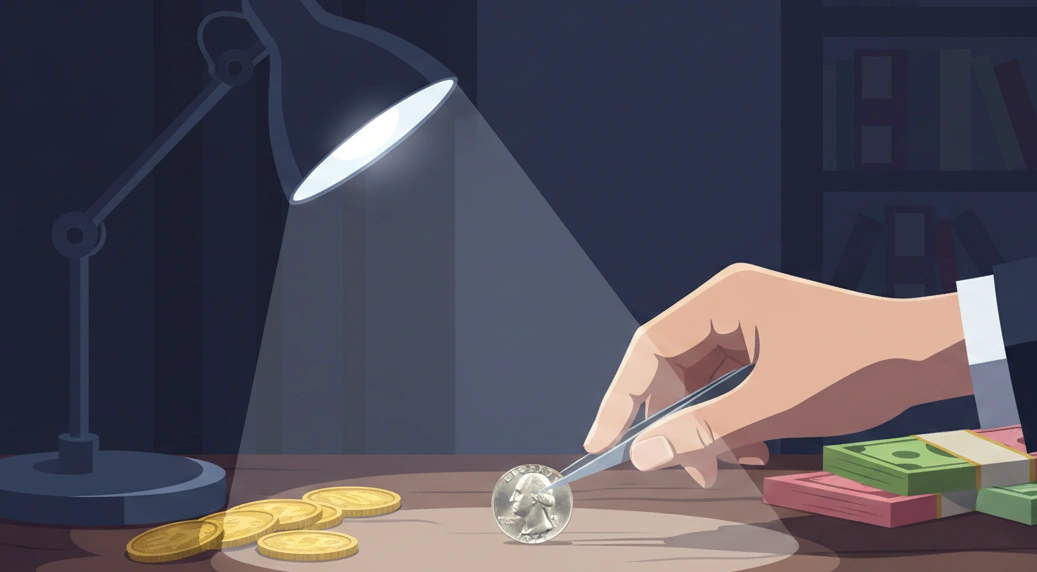
During 1973, the US Mint produced no commemorative reverse designs, retaining the standard eagle motif instead.
Technical Parameters and Composition
This coin possesses characteristics established by the Coinage Act of 1965.
Total weight of the piece equals 5.67 grams.
The diameter of the planchet measures 24.3 millimeters.
Thickness of the coin is set at 1.75 millimeters.
Composition involves an outer layer of 75% copper and 25% nickel bonded to a core of 100% pure copper.
The edge of the coin contains 119 reeds.
Parameter | Value |
Weight | 5.67 g |
Diameter | 24.26 mm |
Composition | Cupro-nickel clad over copper |
Obverse Designer | John Flanagan |
Reverse Designer | John Flanagan |
Production Statistics by Mint
Minting occurred at three primary facilities during 1973.
The Philadelphia Mint produced coins without a mint mark.
The Denver Mint utilized the D mint mark.
The San Francisco Mint specialized in producing Proof sets carrying the S mark.
1973 Mintage Data
Mint | Mint Mark | Mintage |
Philadelphia | None | 346,924,000 |
Denver | D | 232,977,400 |
San Francisco (Proof) | S | 2,760,339 |
Total production volume exceeded 582 million units.
High mintage numbers ensure the coin remains readily available in common circulation.
Market Indicators and Record Prices
Investment value for 1973 quarters depends on the preservation state according to the Sheldon scale.
Most circulated coins fall between VG and AU grades, corresponding to their face value.
Specimens in MS67 condition and higher appear extremely rarely, creating a deficit in the auction market.
Coin Type | Grade | Realized Price | Sale Year |
1973-D Washington Quarter | MS68 | $1,438 | 2013 |
1973-P Washington Quarter | MS67+ | $1,140 | 2018 |
1973-S Washington Quarter (Proof) | PR70 DCAM | $2,760 | 2007 |
1973-D Washington Quarter | MS67 | $240 | 2021 |
The value for MS65 condition coins remains stable in the $10–$15 range.
Upon transitioning to the MS67 grade, the price increases by 1500% relative to the MS65 value.
Annual price changes for certified top-tier specimens average approximately 3.5%.
Population Report
Statistics from independent grading services (PCGS and NGC) confirm the scarcity of high grades.
Using outdated coin packaging technologies in 1973 led to the frequent occurrence of contact marks.
Transporting coins in canvas bags contributed to the formation of surface scratches.
Grade Distribution
PCGS Data as of 2024.
1973-P coins in MS67 grade: fewer than 50 pcs
1973-D coins in MS67 grade: fewer than 200 pcs
1973-D coins in MS68 grade: 1 pc
1973-S coins in PR70 grade: fewer than 100 pcs
The low number of surviving specimens in ideal condition results from a lack of special preservation measures in 1973.
Owners of bank bags from that period often discover minting defects reducing the grade to MS63–MS64.
Mint Errors and Numismatic Varieties
Production processes in 1973 involved the emergence of technical errors.
Mint errors are classified as deviations from the standard technological process.
Coins struck on planchets intended for other denominations are recognized as the most valuable.
Registered Error Types
Struck on a 10-cent planchet (Dime Planchet). The weight of the coin in this instance is 2.27 grams.
Double Strike. The image is duplicated with a displacement relative to the center.
Off-center strike. The design is missing from a portion of the coin due to incorrect planchet feeding.
Die Cracks. Raised lines corresponding to the destruction of the working tool are visible on the surface.
The price for a 1973 quarter with a 50% off-center error can reach $250–$300.
Error coins are not subject to annual devaluation due to their unique nature.
Investment Performance of Mint Sets
Annual 1973 sets contain one specimen of each denomination from both mint facilities.
During 1973, the Mint sold 1,767,691 Uncirculated Mint Sets.
Original placement price for a set was $3.50.
Current market value for a set varies between $5 and $8.
The return on investment for these sets over 50 years totaled less than 130% without adjusting for inflation.
This indicates low investment efficiency for standard uncertified 1973 sets.
Influence of the US Bicentennial Program on 1973 Issues
Preparation for 1976 began three years prior to the anniversary.
The US Mint planned to alter the designs for the quarter, dime, and half dollar.
Legislation prohibited the issuance of quarters with a "1975" date.
Consequently, dies with the "1973" date were utilized until the transition to the Bicentennial series.
Increased equipment load led to accelerated die wear towards the end of the year.
Worn dies left blurry, indistinct images on the coins.
The market values such specimens lower than coins struck with fresh dies.
Grading and Verification
Determining the authenticity of 1973 coins does not require complex equipment.
The absence of silver in the composition eliminates the possibility of counterfeiting via chemical alteration.
Counterfeit activity primarily focuses on imitating rare errors.
Weight verification remains the fundamental method for validation.
A weight deviation exceeding 0.15 grams (in the absence of wear) indicates a violation of production technology.
Condition Evaluation Criteria for 1973
MS60: Presence of multiple scratches and absence of luster
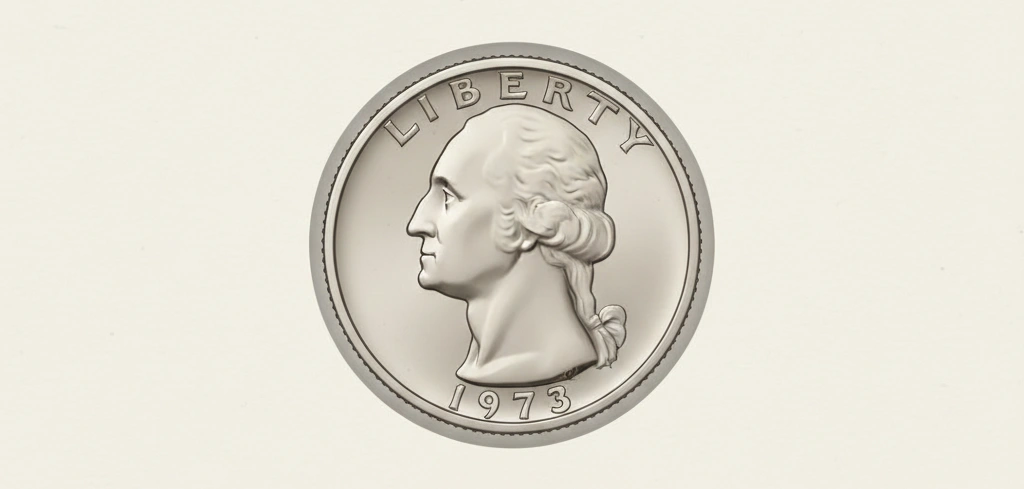
MS63: Moderate contact marks on the obverse (Washington's portrait)
MS65: Retention of original mint luster with minimal damage
MS67: Absence of visible defects under fivefold magnification
Perspectives on Collecting 1973 Quarters
The market segment for 1970s coins demonstrates moderate growth.
Investor interest is shifting toward finding Pop 1 specimens (unique within their grade).
Discovering a new MS68 specimen could potentially reduce the price of the previous record holder by 30–40%.
This is due to the high concentration of value in singular objects.
For the mass collector, the 1973 coin remains an essential year-set element.
A complete Washington quarter collection (1932–1998) requires this year in MS65 condition or better to maintain liquidity.
List of Organizations and Assessment Resources
Professional Coin Grading Service (PCGS)
Numismatic Guaranty Company (NGC)
Heritage Auctions
Coin ID Scanner
Stack's Bowers Galleries
US Mint Archives
Statistical data confirm the stability of this issue on the market.
Lack of speculative demand makes the 1973 quarter an object for long-term study.
Analysis of auction results over the last 10 years revealed a 12% increase in interest for MS66+ condition coins.
This exceeds inflation rates but lags behind returns for quarters from earlier periods (1932–1964).
Conclusion of the 1973 production cycle marked the end of the era of standard Washington quarters before major design reforms.

Are you ready to take your fitness journey to the next level? High Intensity Interval Training (HIIT) is a powerful workout method that can help you transform your body in just 30 days. By incorporati...

Discover how discipline, not motivation, fuels body transformation. Learn effective training principles, mental strategies to overcome fatigue, and how rewards symbolize progress. Achieve lasting resu...
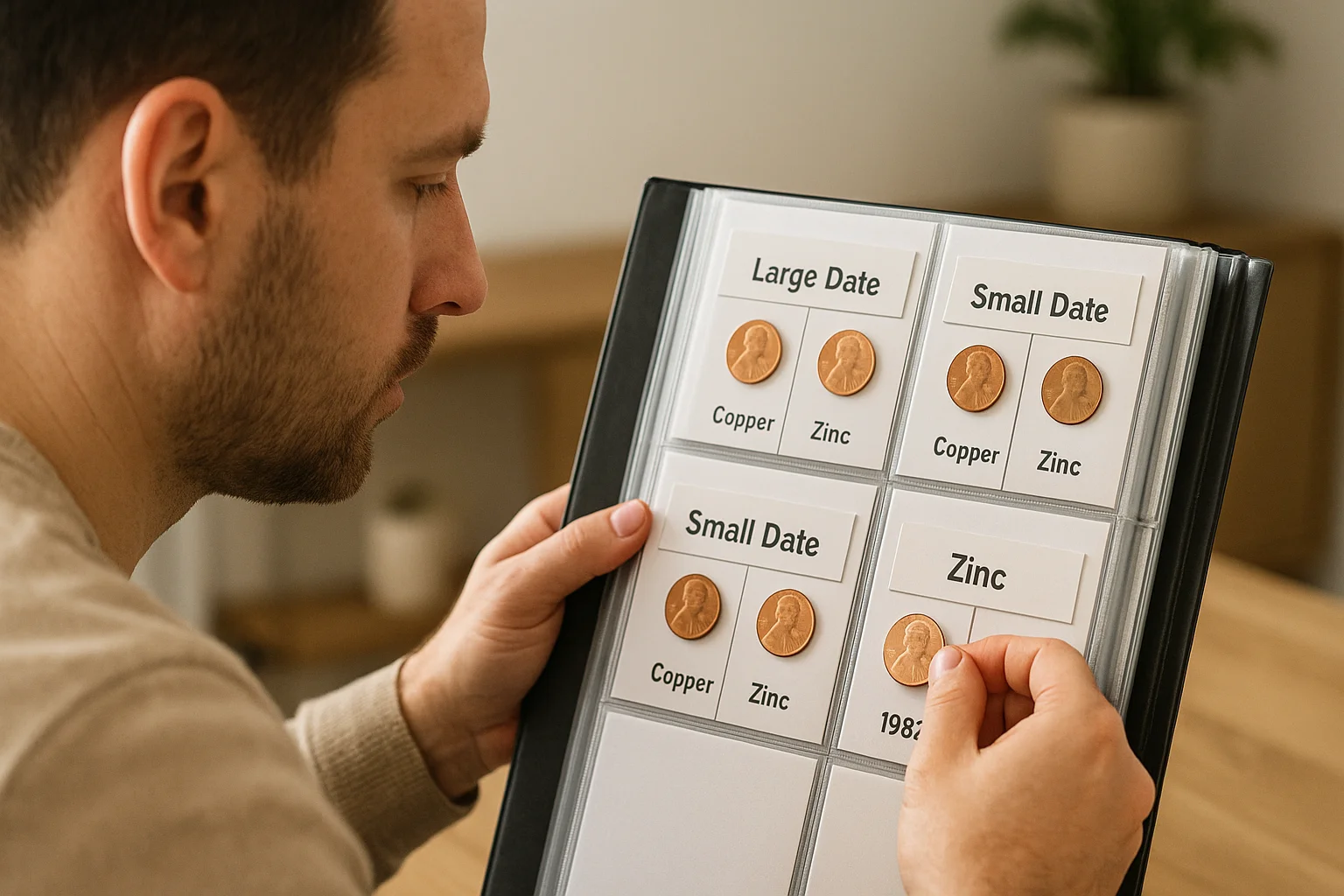
Discover the differences between 1982-D Lincoln penny varieties — copper vs. zinc, Large Date vs. Small Date. Learn how to spot the rare 1982-D Small Date Copper worth thousands, check weight, value...